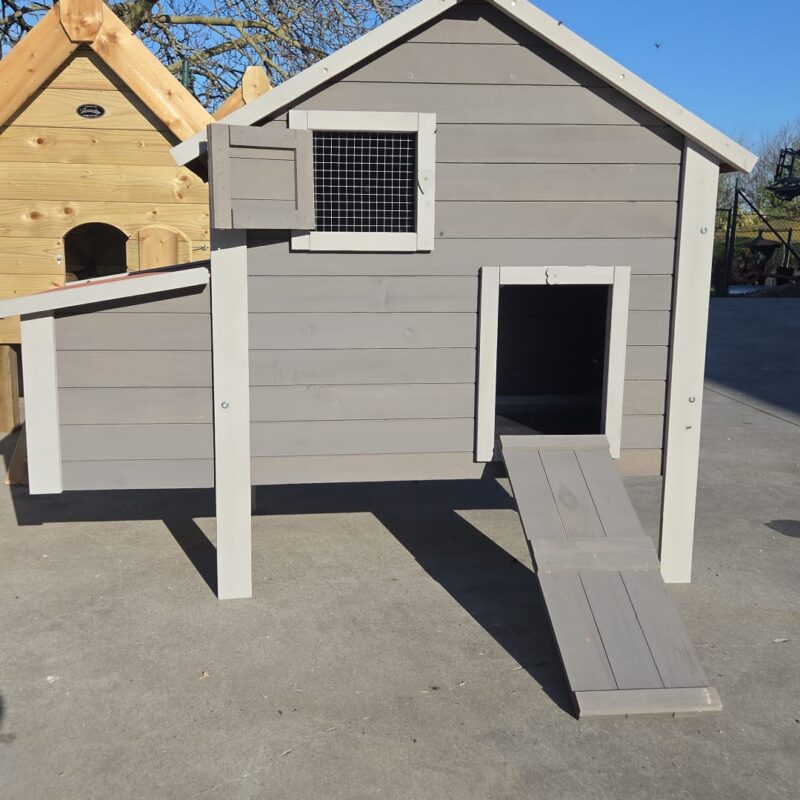
The graceful cuckoo-colored laying hen
At De Meidoornhoeve, we welcome you to discover our beautiful cuckoo chickens. With their black-and-white patterned plumage, these ladies are a real eye-catcher in any garden, and they are prolific layers. This breed combines a graceful appearance with reliable egg production and a calm character, making it a favorite for both beginners and experienced enthusiasts.
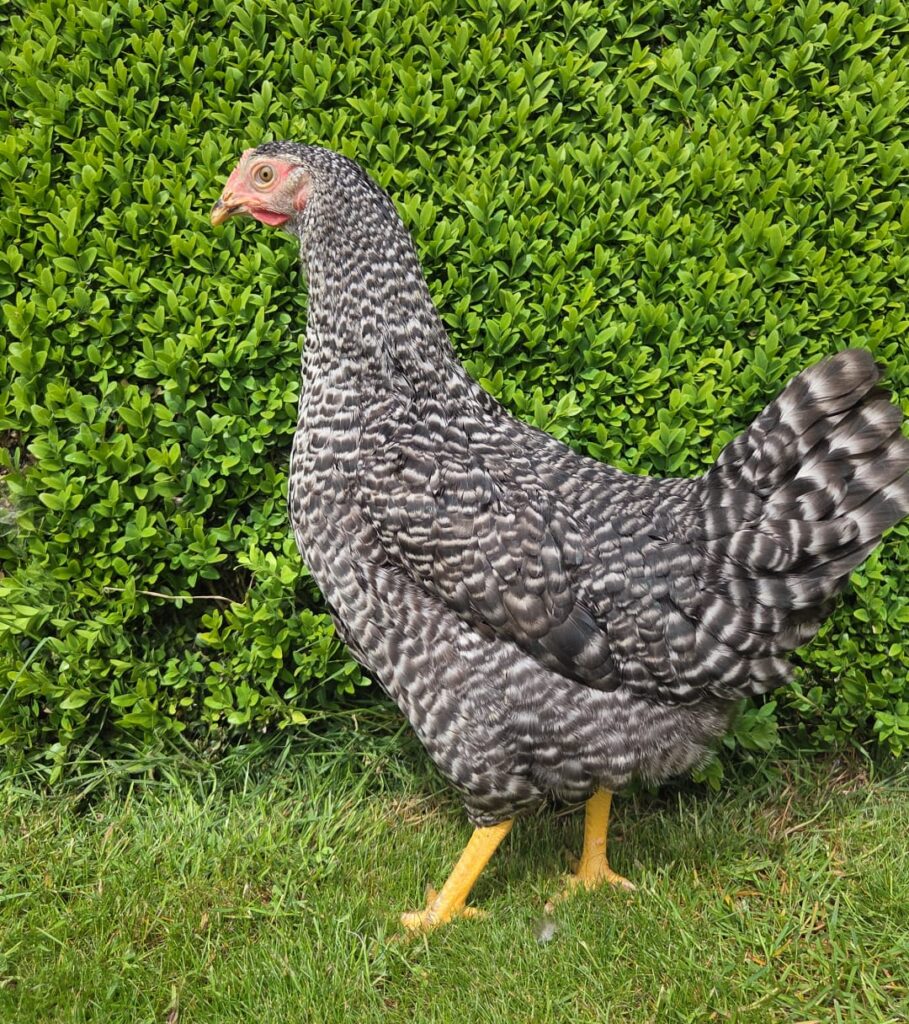
Origin and appearance
The name does not refer to the bird, but to the cuckoo pattern: a fine, irregular black-and-white barred pattern that runs across every feather. This gives the chicken its typical grey-speckled appearance, which looks particularly beautiful up close.
Cuckoo-patterned chickens come in various types. The variant we offer is a light, productive laying hen, not to be confused with the heavy Malines Cuckoo, which is primarily kept as a meat breed. Our ladies are slenderly built, agile, and bred with egg production in mind.
A beautiful and industrious layer
The graceful appearance might suggest it is a purely decorative chicken, but nothing could be further from the truth. These speckled ladies lay up to 280 light brown eggs per year, averaging 5 per week during the peak season. They start laying between 21 and 26 weeks of age.
For comparison: a white Leghorn lays larger quantities of white eggs, while an Isa Brown is the classic brown laying champion. The cuckoo chicken stands out mainly due to the combination of decorative plumage and great laying performance, ideal for those who want a chicken coop that is not only useful but also pleasing to the eye.
Cuckoo laying hens at De Meidoornhoeve
At De Meidoornhoeve, we pay great attention to the care of our animals. Our speckled ladies receive the best living conditions and nutrition, so they arrive at your home in top condition. Feel free to visit us in Oostnieuwkerke; we are happy to help you choose the right number and combination for your garden.
The difference with the Malines Cuckoo
This is a frequently asked question, so let’s break it down. Both chickens have the same recognizable black-and-white striped plumage, but that is where the similarity ends:
- The Malines Cuckoo is a large, heavy meat breed (dual-purpose) that lays an average of about 150 eggs per year and has feathered legs.
- Our cuckoo laying hen is more lightly built, has bare legs, and is bred for laying: up to 280 eggs per year.
If you are primarily looking for fresh eggs, the light cuckoo chicken is your best choice. If you are looking for a substantial dual-purpose breed, you will end up with the Malines Cuckoo.
Calm, strong, and easy to keep
In terms of character, these chickens are calm and balanced. They are curious without being skittish and can be easily tamed with a little patience. This makes them an excellent choice for families with children.
Furthermore, they have good resistance and are winter-hardy — they feel perfectly at home in the Belgian climate. Because they are not good flyers, they easily stay within a fenced run. They get along well with other calm laying breeds such as the Harco, the Bleu de Lande, or the Sussex.
Frequently Asked Questions
How many eggs does a cuckoo laying hen lay per year?
A cuckoo laying hen lays up to 280 light brown eggs per year, averaging about 5 per week during the peak season. She starts laying between 21 and 26 weeks of age.
What is the difference between a cuckoo laying hen and a Malines Cuckoo?
Both have the same black-and-white striped plumage, but they are different chickens. The Malines Cuckoo is a heavy meat breed (dual-purpose) with feathered legs that lays about 150 eggs per year. The cuckoo laying hen we offer is lighter, has bare legs, and is bred for laying, with up to 280 eggs per year.
What color eggs does a cuckoo chicken lay?
She lays light brown eggs of average size.
Where does the name "cuckoo" come from?
The name refers to the cuckoo pattern of the feathers: a fine, irregular black-and-white barred pattern that runs across every feather. It has nothing to do with the bird itself.
Is the cuckoo chicken suitable for beginners?
Yes. These ladies have a calm and balanced character, are not skittish, and can be easily tamed with a little patience. This makes them ideal for families and beginners.
Is the cuckoo laying hen winter-hardy?
Yes. She has good resistance and feels perfectly at home in the Belgian climate, even during the colder months.
Can a cuckoo chicken fly well?
No, they are not good flyers. A fence of about one meter is usually sufficient to keep them within your garden.
Which other laying breeds can I combine them with?
She goes excellently with other calm laying breeds such as the Harco, Bleu de Lande, Isa Brown, or Sussex.